

Hunger is often blamed on habits, willpower, or routine. But in reality, hunger is largely controlled by hormones that constantly communicate between your gut, brain, and fat tissue.
If you’ve ever wondered why some days you feel satisfied after eating and other days you feel hungry no matter what, the answer often lies in hunger hormones.
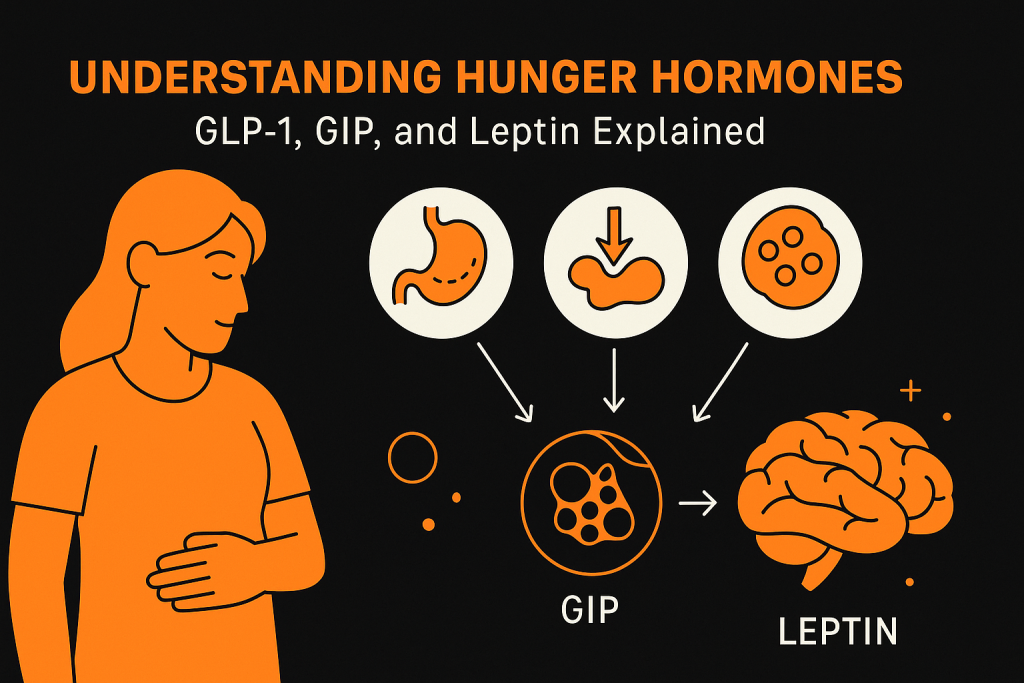
Three of the most important ones are GLP-1, GIP, and leptin. Understanding how they work helps explain modern weight challenges and why metabolic research has shifted its focus in recent years.
Hunger Is a Hormonal Signal, Not a Character Flaw
Hunger isn’t random. It’s a biological response driven by chemical messengers that evolved to keep humans alive during scarcity.
In today’s world of constant food availability, stress, and processed meals, these signals can become confused. When that happens, hunger may no longer reflect true energy needs.
This is why modern research looks at signal regulation, not just calorie intake.
What Is GLP-1?
GLP-1, short for glucagon-like peptide-1, is a hormone released in the gut after eating.
Its role includes:
- Signaling fullness to the brain
- Slowing digestion so food stays in the stomach longer
- Supporting balanced blood sugar response
- Reducing sudden hunger spikes after meals
GLP-1 helps tell your brain, “You’ve had enough.” When GLP-1 signaling works well, appetite tends to feel more controlled and predictable.
When GLP-1 Signaling Becomes Less Effective
Over time, frequent blood sugar spikes, poor sleep, stress, and metabolic strain can reduce how effectively GLP-1 signals are received.
When this happens, people may notice:
- Feeling hungry soon after eating
- Difficulty feeling satisfied
- Increased cravings between meals
This doesn’t mean GLP-1 stops working, but its signals may become weaker or less consistent.
What Is GIP and Why Does It Matter?
GIP stands for glucose-dependent insulinotropic polypeptide. It works alongside GLP-1 and plays a role in how the body handles energy.
GIP is involved in:
- Insulin response after meals
- Fat storage and energy use
- Metabolic efficiency
- Communication between gut and fat tissue
While GLP-1 focuses more on fullness and digestion, GIP influences how energy is processed and stored.
Modern metabolic research increasingly looks at how GLP-1 and GIP interact, rather than studying them in isolation.
Why the GLP-1 and GIP Combination Is Important
Appetite control is not just about feeling full. It’s about how the body processes energy after eating.
When GLP-1 and GIP signaling are aligned, the body may experience:
- More stable appetite signals
- Smoother blood sugar response
- Better energy balance
- Reduced extreme hunger swings
This dual-pathway understanding is why compounds studied for their interaction with both hormones, such as Tirzepatide 20mg, are frequently referenced in advanced metabolic research discussions.
What Is Leptin?
Leptin is often called the “satiety hormone.” It is produced by fat cells and tells the brain how much energy the body has stored.
In simple terms, leptin helps regulate long-term energy balance by signaling when fat stores are sufficient.
When leptin signaling works properly, the brain understands that the body has enough energy and reduces hunger accordingly.
Leptin Resistance and Constant Hunger
Many people with ongoing weight challenges experience leptin resistance, where the brain no longer responds properly to leptin signals.
This can lead to:
- Feeling hungry despite adequate energy stores
- Difficulty maintaining weight loss
- Increased appetite during dieting
Leptin resistance shows why hunger is not just about eating too little. It’s about how signals are interpreted.
How These Hormones Work Together
GLP-1, GIP, and leptin are part of a larger network. They don’t act independently.
When signaling between them is disrupted, the body may:
- Misinterpret hunger signals
- Store energy more aggressively
- Trigger cravings and fatigue
This is why modern metabolic research focuses on system-level regulation rather than targeting one hormone alone.
Why Modern Weight Management Looks Different Now
Traditional approaches focused on restriction often ignore hormonal signaling. This can create short-term results but long-term frustration.
Modern research asks different questions:
- How does the body signal hunger?
- Why does appetite increase during stress or fatigue?
- How can metabolic signals be stabilized?
Understanding hormones like GLP-1, GIP, and leptin helps explain why sustainable weight management requires more than discipline.
The Bigger Picture
Hunger hormones are not the enemy. They are messengers trying to protect the body.
When their signals become distorted, hunger and cravings increase, even when energy needs are met. That’s why education and research into metabolic signaling continues to grow.
As science evolves, compounds studied for their role in dual-pathway metabolic signaling, including research-grade options like Tirzepatide 20mg, remain central to discussions about appetite regulation and long-term metabolic balance.