

If you have ever wondered why losing weight feels easy in your early twenties but becomes a complete struggle later on, you are definitely not alone. Almost everyone reaches a point where the body feels slower and stubborn, even if life routines look exactly the same. It is a weird feeling and honestly a little frustrating, but there is a real science behind it.
The truth is that metabolism naturally slows down as we grow older. It happens quietly, almost like a guest who enters your house without knocking. One day you wake up and suddenly the same breakfast that never bothered you before is now sitting like a complete brick in your stomach. You eat the same food, but your body responds differently. You try to walk more and suddenly the weight still refuses to move. It feels unfair, but there are clear biological reasons behind it.
Today we will break this down in a friendly way. No boring textbook talk. Just simple science, everyday examples, and an easy explanation of how modern research tools like Retatrutide are helping experts understand metabolic changes even better.
Why Metabolism Slows Down With Age
Your metabolism is basically the speed at which your body burns energy. In your younger years this system works like a brand new sports car. Everything feels smooth, fast and effortless. Then the years start stacking up and suddenly the same engine feels more like a quiet little scooter.
Here are the main reasons this happens.
Muscle Loss Over Time
Muscle is active tissue, which means it burns calories even when you are resting. But as we age, we naturally lose muscle unless we actively train to keep it. Less muscle simply means your body uses less energy throughout the day. Even tiny reductions in muscle can make a noticeable difference over a few years.
Hormonal Shifts
Hormones guide almost every process in your body including hunger, fullness, fat storage and even mood. As your hormones change over time, your body becomes more likely to store energy rather than burn it. This is a big reason why many people feel their appetite stays the same but their body reacts differently.
Changes in Activity Levels
The older we get, the busier we become. Work responsibilities grow, kids enter the picture, stress increases and the overall energy to move around lowers. Even a small decrease in daily activity affects metabolism.
Your Body Becomes More Protective
This is something many people do not realize. The human body sees weight loss as a threat. When you start reducing calories, it slows down metabolic speed to protect you from starvation. With age, this protective response becomes stronger, making weight loss harder than it was before.
What This Slower Metabolism Feels Like in Real Life
You may notice a few signs that your metabolism is not as lively as it used to be.
- You gain weight faster even when eating the same meals
- Your energy feels low in the mornings
- You feel full for longer but still gain weight
- Your clothes start feeling tighter around the middle
- You feel like you need more effort to get the same results
- You get tired faster during simple activities
This is not a lack of discipline. This is biology doing its thing. The good news is that science has been working on this problem more than ever before.
How Modern Science Helps With Slower Metabolism
The last few years have been a massive turning point for weight related research. Experts are studying metabolic signaling, appetite control and energy systems in far more detail than ever before.
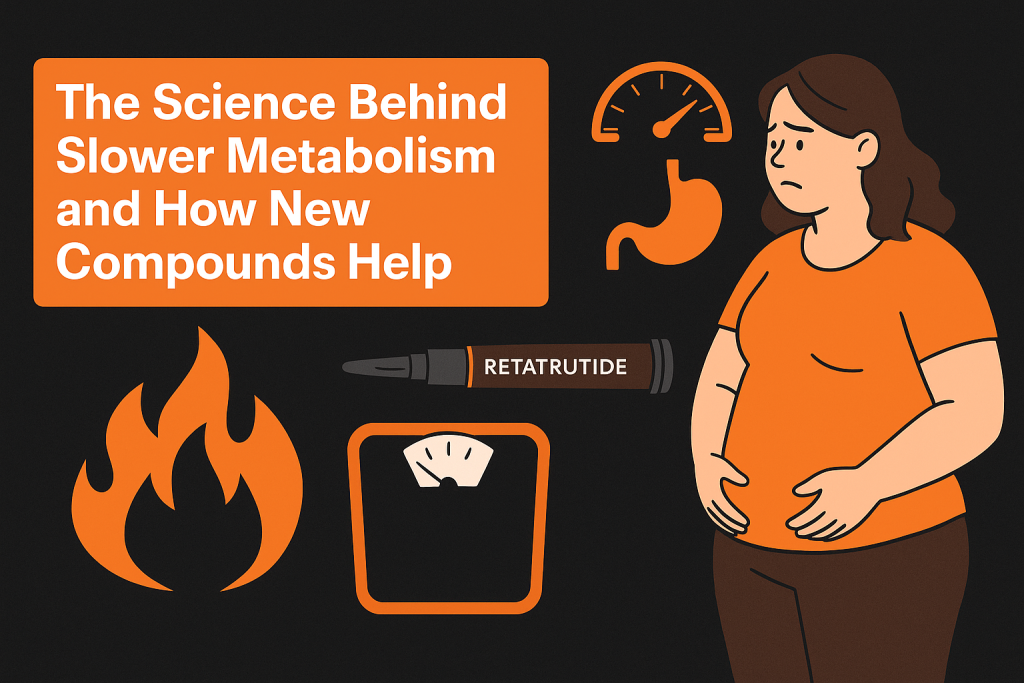
One of the biggest breakthroughs is the study of multi receptor agonists. These are research compounds that interact with several pathways at once and help experts understand deeper metabolic behavior. Retatrutide is one of the most talked about compounds in this category. It has been a major point of discussion in scientific communities because it targets several metabolic receptors at the same time. This allows researchers to observe appetite control, energy use and insulin activity in a more complete way.
To be very clear, compounds like Retatrutide are not regular lifestyle supplements. They are used in controlled research settings only. But they give us a better understanding of how different body systems communicate with each other during weight loss. This is helpful because metabolism is not controlled by one single switch. It is many switches working together.
Why Tools Like Retatrutide Are Getting So Much Attention
The excitement around multi receptor research compounds comes from one simple idea. The human body does not rely on one signal for hunger or energy. It is a complicated conversation between hormones, nerves and the brain.
Older weight loss approaches only focused on one pathway. Modern research tools, including compounds like Retatrutide, allow experts to observe multiple signals at once. This gives a more complete picture of metabolism and helps scientists understand why some people lose weight easily while others struggle for years.
Another interesting thing is how these compounds affect appetite and energy balance. Many people who take part in research trials report feeling fuller for longer, having fewer food cravings and experiencing steady energy throughout the day. This helps researchers learn more about natural appetite patterns and how the body responds to different types of metabolic signals.
Lifestyle Choices That Support Your Metabolism
Even with all this new science, the basics will always matter. A slower metabolism does not mean you are stuck forever. With small steady changes you can encourage your body to burn energy more efficiently.
Add More Protein
Protein supports muscle repair and helps your body feel full. It also increases the energy your body uses during digestion.
Lift Light Weights
Strength training is one of the most powerful ways to boost metabolism. Even simple home workouts can help rebuild lost muscle.
Improve Your Sleep Routine
Your hormones depend on sleep more than anything else. When you sleep better, your appetite becomes more balanced.
Move More in Simple Ways
Regular walking, stretching and taking stairs can give your metabolism a gentle but helpful push.
Drink Enough Water
Even mild dehydration slows metabolism. Drink water throughout the day to help your body stay active.
The Future of Weight Management Looks Very Different
We are living in a time where the science of metabolism is growing faster than ever. The focus is shifting from old school dieting to real biological understanding. Research compounds like Retatrutide play a big role in this shift because they help experts explore deeper metabolic patterns.
The combination of lifestyle improvements and modern research tools will probably shape the future of weight management. People will not have to guess as much. They will have more clarity about what is happening inside their bodies and why.
Final Thoughts
A slower metabolism is not a sign that something is wrong with you. It is simply a natural part of getting older. Your body changes, your hormones shift, and your engine runs at a different pace. The important thing is understanding what is happening and how to support your system through these changes.
New research, including the study of compounds such as Retatrutide, is giving experts valuable insight into appetite and metabolic behavior. This helps everyone get closer to more effective weight management strategies in the future.